Case study: in progress
Incognito Wraps
A ground-up rebuild of a car wrap company's 90s-era website: modern site, modern stack, and a CMS the owner actually runs.
01: The brief
Replace a 90s-era site without creating a developer dependency.
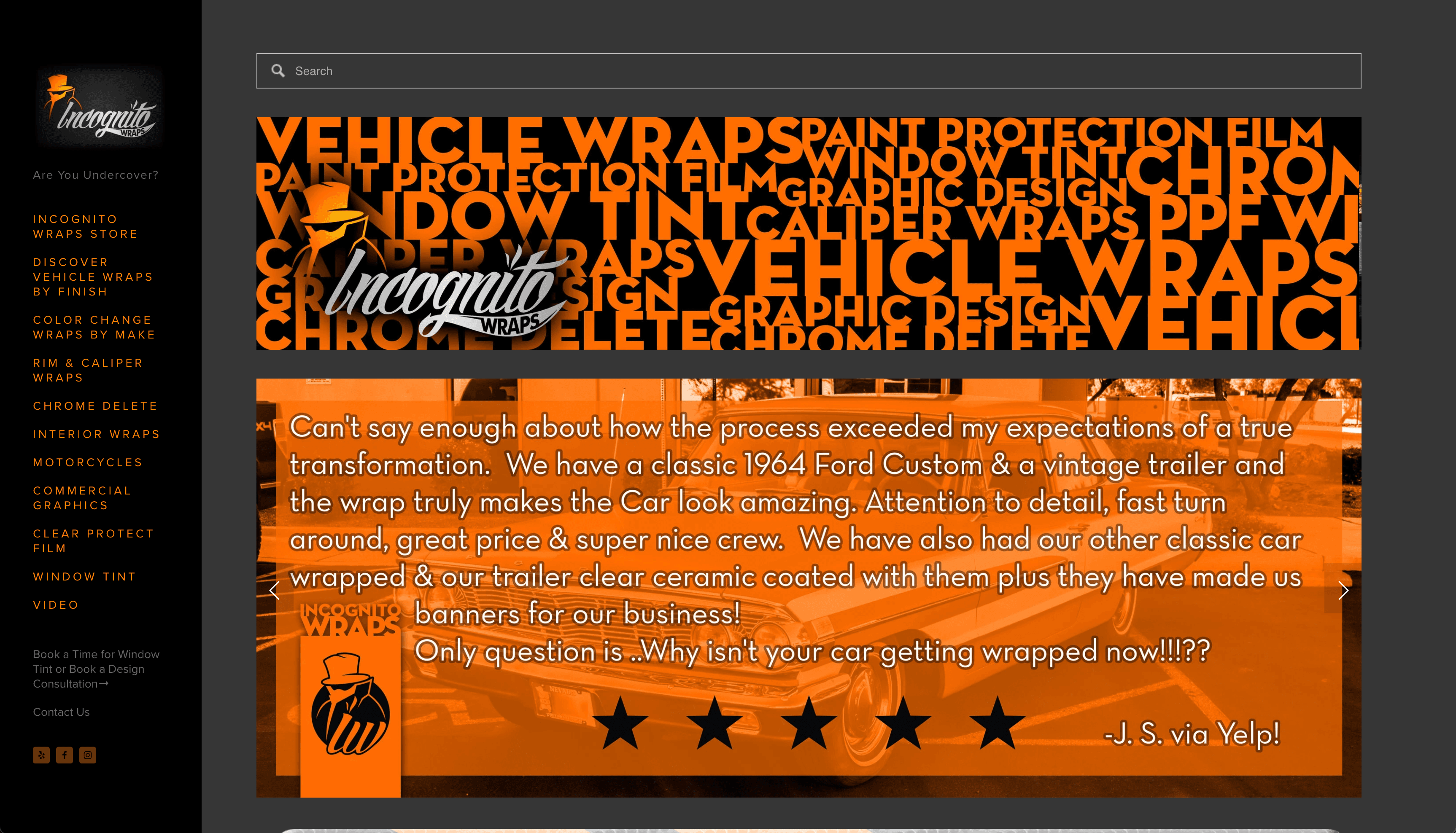
Incognito Wraps came with a site that predated the business it was selling: dated layout, no mobile experience, and every content change routed through whoever built it last. The rebuild has two jobs: make the work look as good online as it does on the cars, and hand the owner the keys.
The second job is the interesting one. The site is wired to a headless CMS so the owner updates photos, services, and pricing without a developer in the loop. A portfolio business that photographs its own work every week shouldn't need to file a ticket to show it off.
02: The design direction
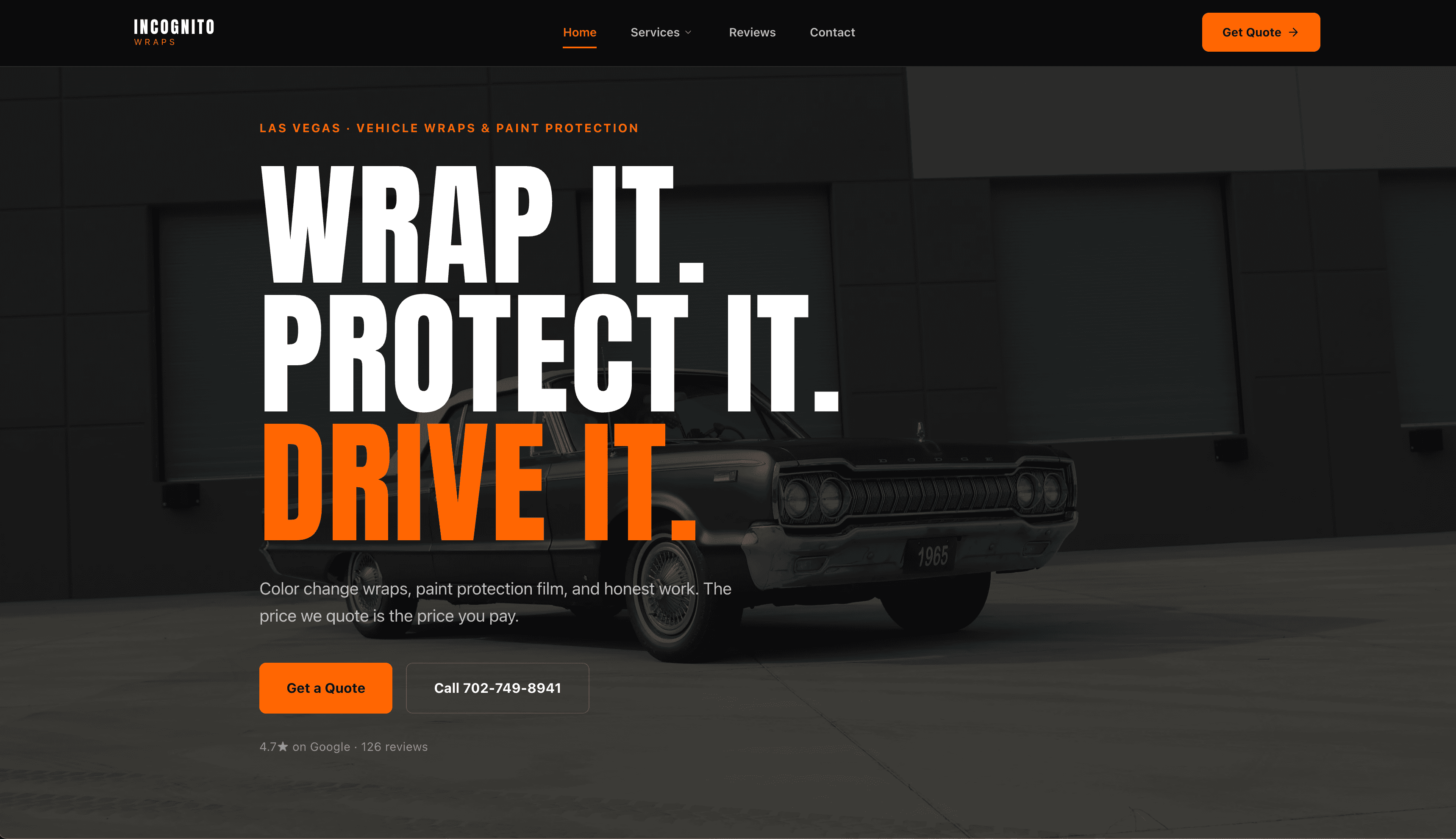
The first build leaned dark, glossy, and techy. It photographed well and sold nothing. The redesign went the other way: flat surfaces, a bold condensed display face, and the shop's black and orange used like tape stripes instead of glow. The copy changed register with it. Lines like “join elite vehicle owners” became “straight answers, clean installs, and a price that doesn't change.” The site sounds like the front counter now, not a showroom.
03: The honesty constraint
The strictest rule on the project: nothing renders that the business can't stand behind. The rating on the site is 4.7 stars across 126 reviews because that is the real Google number. The testimonials are real customers with their real names. Claims that haven't been verified with the owner, like warranty terms, certifications, and track record stats, are held out of the render entirely rather than dressed up. For a local business, invented proof is a legal liability and a trust leak. Empty is acceptable. Invented is not.
04: The handoff
The site reads everything from Sanity: business info, services, packages, portfolio, testimonials, and hero photography. The schema does the protecting. Site Settings is a single locked document, alt text is required on every image, and slugs can't be omitted. The owner logs into a hosted Studio, uploads photos of the week's work, presses Publish, and the site follows within the hour. No developer in the loop, which was the whole point.
05: What's left
The site is in staging while the owner's photo library and verified claims come in. Still ahead: a quote form, an interactive coverage map that highlights which panels each package covers on a photo of a real car, and the DNS cutover to the live domain.